A ceasefire meant to reopen one of the world’s busiest waterways has instead left shipowners waiting on the sidelines, with fewer vessels passing the Strait of Hormuz than during the fiercest days of fighting.
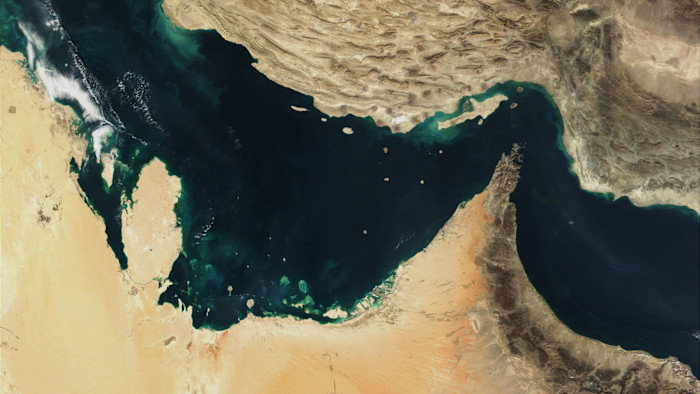
Just four ships were identified passing through the strait on Wednesday, down from 11 on Tuesday, according to ship tracking data. The fall came despite hopes that the US-Iran ceasefire deal would unblock the narrow seaway through which around a fifth of the world’s oil and gas supplies normally flow.
Iran has insisted the ceasefire agreement with the US will allow it to maintain control over the strait, requiring vessels to seek permission from Iran’s Revolutionary Guard Corps and pay a fee. Within hours of the deal to pause fighting, it halted the passage of oil tankers through the strait in response to Israeli strikes on Lebanon.
In a joint statement, the Guards’ naval and aerospace forces said the moves demonstrated Iran would keep its “finger on the trigger” during the two-week ceasefire, with talks with the US set to take place on Friday.
The developments have plunged ships in the Gulf into a state of uncertainty, both over their near-term movements and whether the arrangements point to a more lasting change in the terms for passage through the strait.
“It is a waiting situation,” said SV Anchan, chief executive of Safesea Shipping, whose ship Safesea Vishnu was damaged beyond repair by an Iranian strike on March 11 that killed one crew member. “If you are saying this [agreement] is for the safe passage of the ship we should know the condition of the safe passage.”
“We all feel the situation is very fragile and really want some good guarantees that nothing will happen with these ships transiting,” said Erik Hånell, chief executive of Stena Bulk, which has several tankers inside the Gulf. “How that is going to be set up remains to be seen.”

The system hastily established by Tehran during the conflict has allowed a handful of ships to pass from countries seen as friendly to the regime and not connected to the US, Israel or states that had provided bases for attacks on Iran.
During the two-week ceasefire, Iran has said that it expects payments of up to $2mn per oil tanker in cryptocurrency — a sign of how it plans to exert influence over the strait and recoup the costs incurred during the US-Israeli strikes.
Previously around 140 vessels passed through the strait every day. But shipowners and analysts said that they had little hope that more than 10 to 15 would pass daily through the waterway during the ceasefire given the terms that Iran has demanded for safe passage.
Continuing Iranian control of the strait and claims by US President Donald Trump on Wednesday that the US was “thinking” of setting up a “joint venture” with Iran charging fees for transit of the critical maritime passage have heightened concerns about the future regime in the strait.

Jakob Larsen, chief safety and security officer at the shipowners’ association Bimco, said that the body was advising members to “await further guidance from the relevant authorities” and warned that crossing the strait would for now “involve heightened risk”.
The payment scheme in particular left a “big question mark” about potential violations of western sanctions policy, one industry executive said.
“If the Iranians are demanding a toll right now, if you pay that toll you are likely to be violating the US sanctions on Iran,” said Lars Jensen, chief executive of the advisory firm Vespucci Maritime. “Either [shipowners] choose to keep their vessels in the Gulf or pay Iran in violation of US sanctions to get their ships out.”
Claire McCleskey, co-founder of Clarity Compliance Consulting and a former US sanctions official, said that “putting aside the uncertainty and physical risks of trying to cross the strait right now, the US government has not yet clarified its stance on the “toll” payments. Until they do that, there are still sanctions risks for making those payments.”

Shipbrokers said that insurance also remains a major challenge. “The situation remains clear as mud . . . the main stumbling block for most parties remains a lack of clarity around insurance,” one told the FT.
Anchan, the chief executive of Safesea, said underwriters were requiring shipping companies to provide proof of approval from the IRGC before providing insurance but “no one has a clue where to get this approval from”.
David Smith, head of marine at insurance broker McGill and Partners, said there had been “a huge volume of requests for quotes since the ceasefire”. But he noted that the strait was still “classified as a very high risk area” by the insurance market’s Joint War Committee, whose designations influence the premiums set by underwriters.
Cargo insurance rates quoted for shipping through the strait have fallen from around 7.5 per cent of the insured value of goods last week to around 3.75 per cent on Wednesday, according to one large broker.
“Pricing is down already, but the strait isn’t open, the Iranians still have to sign off on it,” the broker said. “And then you have to pay the toll.” Prior to the war, insurers were charging less than 0.1 per cent of the cost of cargo to transit the strait.
Once approval has been granted by Iran, shipping executives said they would expect the IRGC to set out the schedule and path to navigate through the strait — alleviating their concerns over some of the main shipping lanes being mined.
More than 900 merchant vessels are still stuck in the Gulf and at least 300 are looking to exit as soon as possible, according to industry estimates. The sheer number has raised concerns about safety during the exit phase.
One shipping executive, who has oil tankers stuck in the Gulf, said they expected some sort of queueing system would be necessary. “We can’t all just rush to go through,” they said.
Intertanko, the industry body for independent tanker owners, has been working on a plan for safe transit of vessels in the event of a ceasefire, its marine director Phillip Belcher said.
“It takes into account a large number of vessels trying to leave and enter at the same time,” he said.
Rolf Habben Jansen, chief executive of the container shipping line Hapag-Lloyd, said that even if the ceasefire holds, he did not expect to have a “normal network” for “at least the next six to eight weeks”.
Hånell said that a return to free transit of the strait was “definitely what we expect is going to happen here down the line” but “right now the decision is to stay”.
Additional reporting by Najmeh Bozorgmehr in Tehran. Cartography by Steven Bernard and data visualisation by Alan Smith