Good morning. US President Donald Trump has said “NATO WASN’T THERE WHEN WE NEEDED THEM, AND THEY WON’T BE THERE IF WE NEED THEM AGAIN,” in a post on Truth Social after meeting with the alliance’s secretary-general Mark Rutte in Washington overnight, but did not repeat a threat to leave the alliance.
Today, I explain why the fragile US-Iran ceasefire does not mean Europe’s energy crisis is over, and our Rome team reports on the latest call from Italy for the EU to bend its spending rules.
‘High uncertainty’
European leaders woke up yesterday with the relief of a ceasefire in the US-Iran war. This morning, they will be anxious that it is already falling apart.
Context: The US attacked Iran almost six weeks ago, provoking conflict across the Middle East that has roiled energy markets and threatened to pitch the global economy into crisis.
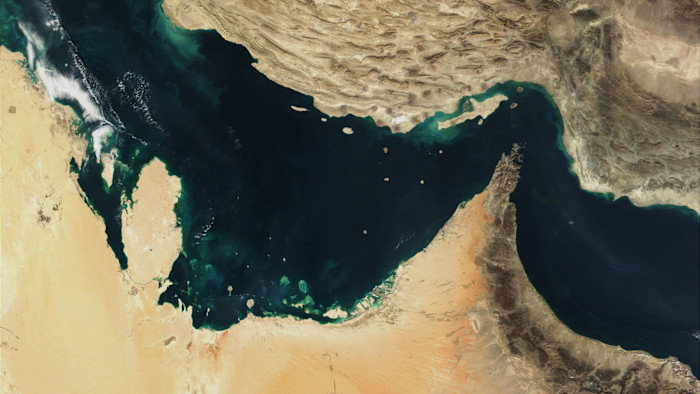
Europe’s immediate reaction to Trump’s proclamation that he had agreed a two-week ceasefire with Tehran, including the reopening of the Strait of Hormuz, a critical waterway for energy exports, was exuberant.
French President Emmanuel Macron began the day saying that the ceasefire was “a very good thing”. But public statements soon shifted from welcoming the deal to urging US and Iranian negotiators to keep talking.
“The goal must now be to negotiate a swift and lasting end to the war within the coming days,” said a joint statement signed by at least a dozen European leaders. “We strongly encourage quick progress towards a substantive negotiated settlement.”
There was good reason for their caution: Israel continued to bomb Lebanon and exchange fire with Iran-backed militant group Hizbollah throughout yesterday, while Tehran said it had moved again to restrict traffic through Hormuz and reported a drone attack on its territory.
While European government borrowing costs fell, stock markets surged and oil and gas prices plunged yesterday, the continent’s energy costs are still roughly a third higher than before the conflict started. As long as that remains the case, Europe’s crisis continues.
Even if the fragile ceasefire holds, and is later replaced by a full peace agreement, damage to Gulf oil and gas production means markets may take years to return to normal, officials said.
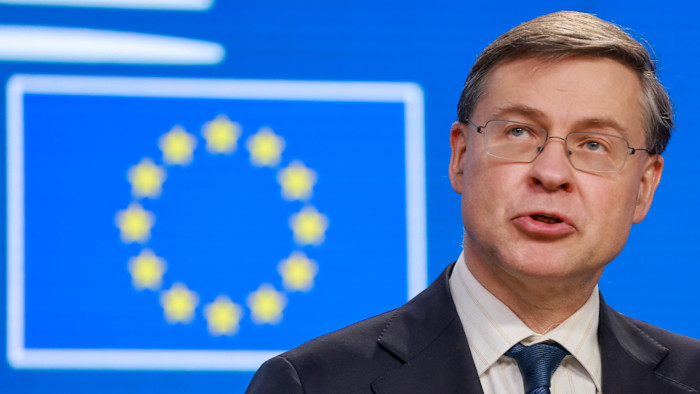
“It’s certainly a welcome step towards de-escalation,” the EU’s economy commissioner Valdis Dombrovskis said in an interview with the FT, in which he warned that the economic impact is “still subject to high uncertainty” and it is “clear that we are facing a stagflationary shock”.
Brussels believes that EU GDP growth could be reduced by 0.6 percentage points this year if energy prices do not return to prewar levels, while inflation would be 1.5 percentage points higher under that same scenario.
Still, oil supplies in the bloc are not expected to be under threat this month, according to an EU official following a meeting of national energy experts.
“A toolbox of concrete actions to help member states mitigate the impact of the crisis is being prepared,” the official added.
Chart du jour: Vox populi

Switzerland’s use of direct democracy, which allows proposals to be put directly to voters through a so-called popular initiative, has risen sharply in recent decades.
Fuel fight
Italy’s deputy prime minister Matteo Salvini has urged Brussels to ease its fiscal rules to let governments help companies and families hit by surging energy prices since the US-Israeli attack on Iran, write Amy Kazmin and Giuliana Ricozzi.
Context: Italy’s 2025 fiscal deficit was confirmed last week at 3.1 per cent of GDP, above the 3 per cent threshold set by the EU’s Stability and Growth Pact. It was a bitter blow to Prime Minister Giorgia Meloni, who hoped to exit Brussels’ excess deficit procedure ahead of next year’s general elections.
Salvini yesterday called the rules a “pact of stupidity,” arguing it should be waived to cope with current global disruptions, regardless of the US-Iran ceasefire.
Rome last month “temporarily” cut fuel excise duties by 20 per cent, initially for three weeks, before extending the measure until May 1 last week, at a cost of nearly €1bn so far.
With elections on the horizon, analysts warn Meloni’s government may be reluctant to reimpose the full taxes unless energy prices fall sharply, risking that the cut turns into a costly drain on already stretched public finances.
EU officials have been urging governments to limit subsidies and tax cuts, wary that the energy shock could tip into a broader fiscal crisis. But Salvini said that EU member states should be permitted to provide aid to its citizens at such a difficult moment.
“We, as the Italian government, simply ask Brussels to allow us to spend the money we want to spend to help Italians in need, because forcing us not to do so would be truly mean,” he said.
What to watch today
-
EU chief diplomat Kaja Kallas meets Saudi foreign minister Prince Faisal bin Farhan in Riyadh.
-
Nato secretary-general Mark Rutte delivers a speech at the Ronald Reagan Presidential Foundation and Institute in Washington.
Now read these
-
Eroding base: Hungary’s poorest regions are turning against Viktor Orbán ahead of Sunday’s election.
-
Skincare scrutiny: Regulators are probing the marketing of skincare products to young girls as social media fuels a surge in “cosmeticorexia”.
-
Guns over growth: Higher defence spending may strain public finances with limited economic upside, the IMF warns.
Are you enjoying Europe Express? Sign up here to have it delivered straight to your inbox every workday at 7am CET and on Saturdays at noon CET. Do tell us what you think, we love to hear from you: [email protected]. Keep up with the latest European stories @FT Europe